Introduction
"Braces or aligners?" is one of the first questions almost every patient asks once they decide to straighten their teeth, whether that's a teenager self-conscious about a crowded smile or an adult who's put it off for years. Both genuinely work. The right choice usually comes down to your specific bite, your lifestyle, and how much you value discretion versus predictability.
This isn't a research paper, it's a plain-language comparison based on established orthodontic guidance, written to help you have a more informed conversation at your next consultation at Sai Dental Studio in Patrapada, Bhubaneswar.
How Braces and Aligners Actually Work
Traditional braces use metal or ceramic brackets bonded to each tooth, connected by a wire. The orthodontist adjusts the wire's tension periodically, applying continuous, controlled pressure that gradually moves teeth into position.
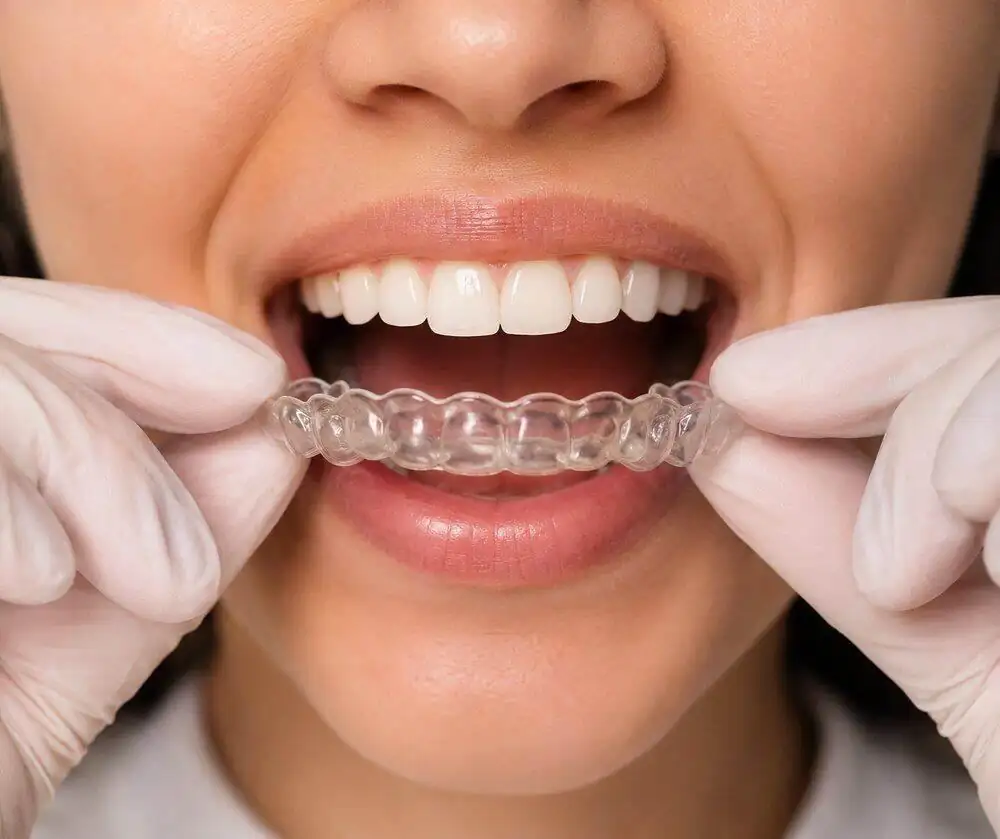
Clear aligners use a series of custom-made, removable plastic trays. Each tray is worn for one to two weeks and shifts your teeth slightly before you move on to the next one in the series, gradually guiding teeth toward the final position.
Both methods rely on the same biological principle, gentle sustained pressure remodels the bone and ligament around a tooth, allowing it to move, just through different mechanisms.
Quick Insight
Aligners are removable, which is exactly what makes them discreet, and exactly why they only work if you actually wear them as directed, generally 20 to 22 hours a day.
Braces vs Aligners: Side by Side
| Factor | Traditional Braces | Clear Aligners |
|---|---|---|
| Visibility | Visible metal or ceramic brackets | Nearly invisible |
| Removable? | No, fixed for the whole treatment | Yes, removable for eating and brushing |
| Best suited for | Mild to complex bite and alignment issues | Mild to moderate alignment issues |
| Diet restrictions | Some hard, sticky, or chewy foods to avoid | None, trays are removed to eat |
| Oral hygiene | Requires more care around brackets and wires | Easier, teeth are brushed and flossed normally |
| Discipline required | Low, it's fixed in place | High, must be worn 20-22 hrs/day to work |
*General comparison for educational purposes; your specific treatment time and suitability depend on an in-person orthodontic assessment.
Key Takeaways
- Both braces and aligners are proven ways to straighten teeth and correct bite issues.
- Aligners are more discreet and removable, but require patient discipline to wear consistently.
- Braces are fixed and often better suited to more complex bite corrections.
- Cost and treatment time vary by case, not by marketing claims.
- A proper orthodontic assessment, not guesswork, should decide which option is right for you.
Myths vs Facts
Who Should Consider Which Option?
Teenagers
Traditional braces remain a common, reliable choice for teens, particularly for more complex bite corrections during active jaw growth.
Adults
Clear aligners are especially popular with working adults who want a more discreet option, though suitability still depends on the specific alignment or bite issue.
Patients With Complex Bite Issues
Significant crowding, spacing, or jaw alignment problems are often better managed with traditional braces, which allow more precise, continuous control.
Patients With Mild to Moderate Crowding
Aligners are frequently well-suited here, offering comparable results with more day-to-day flexibility.
Anyone With Gum Disease or Untreated Cavities
These should generally be treated first, moving teeth through inflamed or unhealthy gum tissue can worsen existing problems.
Risks & Limitations
- Aligners depend on patient compliance — inconsistent wear directly extends treatment time and can compromise results.
- Braces require more careful oral hygiene around brackets and wires to avoid staining or decay during treatment.
- Not every case is aligner-suitable — some bite corrections genuinely need the continuous control braces provide.
- Relapse is possible with either method if a retainer isn't worn as instructed afterward.
- Unsupervised, mail-order aligner kits carry real risk — moving teeth without a dentist assessing your bite and gum health first can cause lasting problems.
Benefits of Straightening Your Teeth
Easier to Clean
Straighter teeth are easier to brush and floss thoroughly, reducing plaque buildup.
More Even Bite
A well-aligned bite distributes chewing pressure more evenly, reducing uneven wear.
Long-Term Confidence
Many patients report lasting confidence improvements after completing treatment.
Reduced Strain Over Time
Correcting bite issues can ease jaw strain that builds up from uneven pressure.
When Should You See an Orthodontist?
- Warning signs: Visible crowding, gaps, an uneven bite, or teeth that have shifted noticeably over time.
- Emergency situations: A broken bracket or wire poking the cheek needs prompt attention to avoid injury, don't wait for your next scheduled visit.
- Preventive care: An early orthodontic check (even for children around age 7) can catch developing bite issues while they're easier to manage.
Frequently Asked Questions
For mild to moderate alignment and bite issues, aligners can be just as effective. For more severe or complex bite problems, traditional braces generally offer more predictable control, which is why a proper assessment matters before choosing either option.
It's never too late. Teeth can be moved orthodontically at almost any age, as long as the gums and jawbone supporting them are healthy. Many adults choose clear aligners specifically because they're less noticeable at work or in social settings.
Both cause mild, temporary pressure discomfort for a few days after a new tray or adjustment. Aligners don't have wires or brackets that can irritate the cheeks and lips, which many patients find more comfortable day-to-day.
It varies by case, but many treatments with either braces or aligners take roughly 12 to 24 months. Minor corrections can be faster; complex bite corrections can take longer. Your orthodontist can give you a personalised estimate after an examination.
Almost always, yes. Teeth naturally tend to drift back toward their original position, and a retainer, worn as directed, is what keeps your results stable long-term.
With aligners, yes, you simply remove them to eat. With braces, most foods are fine, but hard, sticky, or very chewy foods are best avoided to prevent damaging brackets or wires.
We'd advise caution. Moving teeth without a dentist first assessing your bite and gum health carries real risk of complications that can be harder, and more expensive, to fix later.
Yes, we assess each patient individually and recommend the option best suited to your specific bite and goals. Book a consultation to discuss what's right for you.
Conclusion
There's no universally "better" option between braces and aligners, only the option that's better suited to your specific bite, your daily habits, and how disciplined you can realistically be about wearing removable trays. Both can get you to a straighter, healthier smile when the right one is chosen for the right case.
At Sai Dental Studio, that decision starts with an honest assessment, not a sales pitch, because the best orthodontic plan is the one that actually fits your life.
References
- American Association of Orthodontists. Types of Orthodontic Treatment. aaoinfo.org (Patient education — not affiliated with this article)
- Ke Y, Zhu Y, Zhu M. A comparison of treatment effectiveness between clear aligner and fixed appliance therapies. BMC Oral Health. 2019;19:24. DOI: 10.1186/s12903-018-0695-z · PubMed: PMC6360809 (Systematic review: clear aligner vs fixed appliance — not affiliated with this article)
- Zheng M, et al. Clinical effectiveness of Invisalign orthodontic treatment: A systematic review. Eur J Orthod. 2022;44(4):395–404. DOI: 10.1093/ejo/cjac011 · PubMed: PMID 35150267 (European Journal of Orthodontics — not affiliated with this article)
- Tsichlaki A, et al. How long does treatment with fixed orthodontic appliances last? Am J Orthod. 2016;149(3):308–318. DOI: 10.1016/j.ajodo.2015.09.020 · PubMed: PMID 26926020 (Treatment duration meta-analysis — not affiliated with this article)
- American Dental Association. Oral Health Topics — Orthodontics. ada.org — Oral Health Topics (Clinical guidance — not affiliated with this article)
- World Health Organization. Oral Health Fact Sheet. who.int — Oral Health (General public health reference — not affiliated with this article)
- National Library of Medicine — PubMed. pubmed.ncbi.nlm.nih.gov (Database used for peer-reviewed research — not affiliated with this article)